Honestly, the first time I sold lemon sugar scrubs at the farmers market, I thought I had it all figured out. I was so wrong. I showed up with a table full of beautiful jars, watched people sniff them, compliment them, and then walk away empty-handed. It was brutal. But after a few seasons of tweaking everything from the recipe to the jar size, these little scrubs became the item people drive across town for, and they are the cheapest thing I make. This budget lemon sugar scrub recipe is the exact one that turned my market table around, and I’m going to walk you through the mistakes I made so you don’t have to repeat them.
These lemon sugar scrubs cost me about $1.85 per jar to make, and I sell them for $12. I am not a big operation, I do this from my kitchen table, and I still make a solid profit every single Saturday. The look is simple, the ingredients are basic, and the process takes one afternoon. You don’t need fancy equipment or a commercial kitchen to pull this off. You just need to avoid the traps that make most homemade body care products fail at markets.
The Biggest Mistake: Using the Wrong Sugar Texture
Look, if you use pure granulated sugar, you are going to end up with a jar of wet sand that melts the second it touches skin. The texture is all wrong. You need a mix of granulated white sugar and a finer sugar, like caster sugar, to get that scrubby yet gentle feel. When you combine them, the scrub actually holds its shape in the jar, which looks amazing on the table, and it exfoliates without shredding your customers’ hands.
Here’s the thing about sugar allergies and sensitivities too. Pure sugar is naturally antibacterial, which is why this recipe is actually safer to make at home than water-based lotions. But you still need to be careful about moisture. If you are in a humid climate, your sugar can start to clump. To combat this, I keep my kitchen cool and I make sure every single spoon and bowl is completely bone dry before I start. A single drop of water in that mixing bowl will ruin a whole batch.
Kraft Lids and Twine: The Secret to Farmers Market Sales
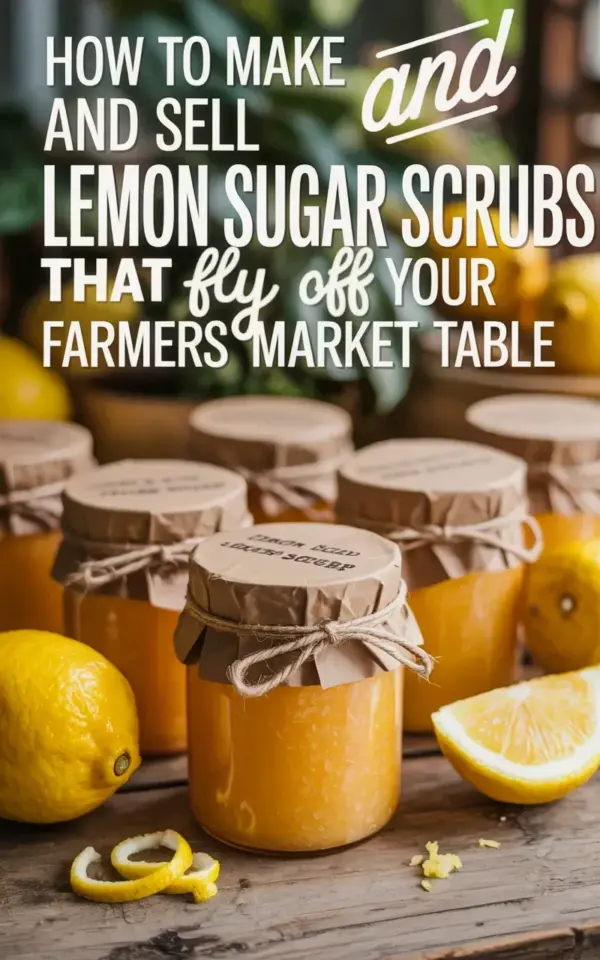
You can use whatever random jars you have in your recycling bin, but that will honestly make your product look like a science experiment. The visual of the simple glass jars with brown kraft paper lids and twine ties is what makes people think “artisan” and “worth $12.” I buy my jars wholesale in cases of 12, and the kraft lids are surprisingly affordable. It is a fraction of the cost of fancy gold lids, and it looks ten times more expensive.
The twine is not just for looks though. It holds the lid on, which is actually important because you don’t want customers opening every single jar to sniff. I tie a little loop into the twine and tuck my business card under it. It acts as a natural seal and a label at the same time. Here is a quick list of what you need for the packaging part:
– 4 oz or 8 oz glass jars with regular mouths (the smaller size is a better impulse buy).
– Brown kraft paper lids in the matching size.
– Natural twine, cut into 12-inch strips.
– A small tag or a strip of kraft paper for the label.
– Mod Podge or a glue stick to seal the label if you want it to look fancy.
One more thing about the jars: do not overfill them. Leave a little headspace at the top. It makes the jar look fuller than it is, and it gives you room to fluff the sugar up a bit before you tie the lid on. A packed jar looks dense and hard, and nobody wants to dig their fingers into a brick.
Why Coconut Oil Ruins the Batch (and What to Use Instead)
Every Pinterest recipe tells you to use coconut oil, but coconut oil is a disaster for a cold market morning. It starts solidifying the second the temperature drops, and you end up selling a rock-hard jar that nobody can use. Instead, I use fractionated coconut oil, which is liquid at room temperature, or a lightweight sweet almond oil. It keeps the scrub scoopable and silky, and it absorbs into the skin so much faster than regular coconut oil.
My actual budget recipe is simple: one cup of mixed sugars, half a cup of liquid oil, and the zest of two full lemons. That’s it. I whip it with a hand mixer for about three minutes until it looks like wet sand. If you want to get a stronger scent without using essential oil (which is pricey), you can use a teaspoon of lemon extract from the baking aisle. It has a few extra ingredients, but it gives off that candy-like lemon smell that people go crazy for.
I also learned the hard way that you need to add a preservative or an antioxidant if you are adding lemon juice. The juice makes it smell divine and gives it that bright yellow color, but it also introduces water into the mix. Water means mold in a sugar scrub, and mold will get you kicked out of the market permanently. I use a few drops of Vitamin E oil and I skip the juice entirely. The zest gives it the color and the scent, and the extract does the heavy lifting for the smell.
Batch Pricing: How to Keep It Under $2 a Jar
The thing that makes this product a no-brainer for your lineup is the profit margin. You can batch these for under $2 a jar and sell for $10 or more without feeling guilty. The bulk ingredients last for months, and the only recurring cost is the packaging. When I run the numbers, the sugar costs me pennies, the oil costs me about sixty cents a jar, and the jar and lid cost me about a dollar.
I know what you are thinking, that $2 estimate is too low. But I buy my sugar in the big 10-pound bags from a restaurant supply store, and I buy my glassware from a wholesale distributor online. You are not paying retail for this stuff, and you shouldn’t either. Look for local co-ops or Facebook Marketplace listings from people who are closing their Etsy shops. You can score jars for a song if you are patient.
Don’t underprice your work just because the ingredients are cheap. You are paying yourself for the labor of zesting all those lemons, which is the most annoying job in the world, and you are providing a product that makes people feel pampered. Here is a breakdown of my costs per small batch of ten 8-oz jars:
– Sugar mix: $2.50.
– Almond oil: $4.00.
– Lemons (for zest and juice if you use it): $3.00.
– Jars and lids: $9.00.
– Twine and tags: $1.00.
– Total: $19.50, which is under $2 per jar.
Your total will vary depending on where you live, but it is still far cheaper than buying bath salts at the store. And when I put that jar next to a vendor selling $20 candles, my product looks like a steal.
The Farmers Market Scent Test and How to Win It
Let me tell you about the scent test. At my market, I watched a woman pick up my scrub, open the jar, and take a sniff. She put it down, looked at the price, and walked away. I couldn’t figure it out. Then I smelled it myself, and it just smelled like a napkin soaked in oil. The lemon scent was gone.
You have to set the stage. The problem was I made the scrubs a week before the market, and the fragrance faded into the base oils. The fix is to make the scrubs no more than two days before you sell them. Freshly zested lemons are potent, but that scent dissipates quickly. When I sell, I also bring one open tester jar that I refresh with a drop of lemon essential oil on the top before the market opens. People smell that tester jar from two tables away, and they come to you. You have to hook them with the nose before they ever get close enough to judge the jars.
Another mistake I made was placing those fresh lemon slices on the table that you see in all the product photos. It looks gorgeous, I love the rustic wooden table aesthetic, but it confuses customers. They think the lemon slice is part of the product or that they should be able to see it inside the jar. I keep the lemons in the photo for my Instagram, but on the actual table, I keep it clean. The jars are the stars.
How to Scale Up Without Losing Your Mind
When you are making five jars for a gift, it’s fun. When you are making forty jars for a market, it’s a chore. The first time I tried to scale up, I doubled the batch, and my arm nearly fell off whipping the sugar by hand. Use a stand mixer or a hand mixer with a large bowl, and work in batches. Do not try to mix ten cups of sugar at once. The motor will overheat, and the sugar will fly everywhere.
I also learned to set up an assembly line. I lay out all my jars in rows on the counter, scoop the scrub in, and then do the packaging step for the whole line at once. This sounds obvious, but it saves me about an hour of production time. It also helps me keep the quality consistent. If I make each jar start to finish individually, I get bored halfway through and start rushing. The assembly line keeps me honest.
And be honest with yourself about the cost of your time. If you are zesting lemons for two hours and getting blisters on your fingers, you need to factor that into the price. That is why the price point of $10 or $12 is so important. It recognizes your effort. It is not just about the ingredients; it is about the labor and the fact that you are providing a luxury item for people who want a spa day at home.
Final Thoughts on Selling Lemon Sugar Scrubs
This lemon sugar scrub recipe is my best seller because it hits that sweet spot of looking expensive and being achievable on a budget. It is a beginner-friendly project, but it has a professional payoff if you pay attention to the details. Stay away from water, use the right oil, and don’t let your jars sit in a hot car on the way to the market.
You should definitely save this for your next market prep, and honestly, you should test the recipe tonight. It takes twenty minutes, and you probably have the sugar and lemons in your kitchen right now. Once you taste that profit margin, you’ll be hooked. Go make a mess and sell some scrubs. You’ve got this.
#lemonsugarscrubs #farmersmarket #
Leave a Comment